


1. Genetics & Evolution: Mendelian Inheritance
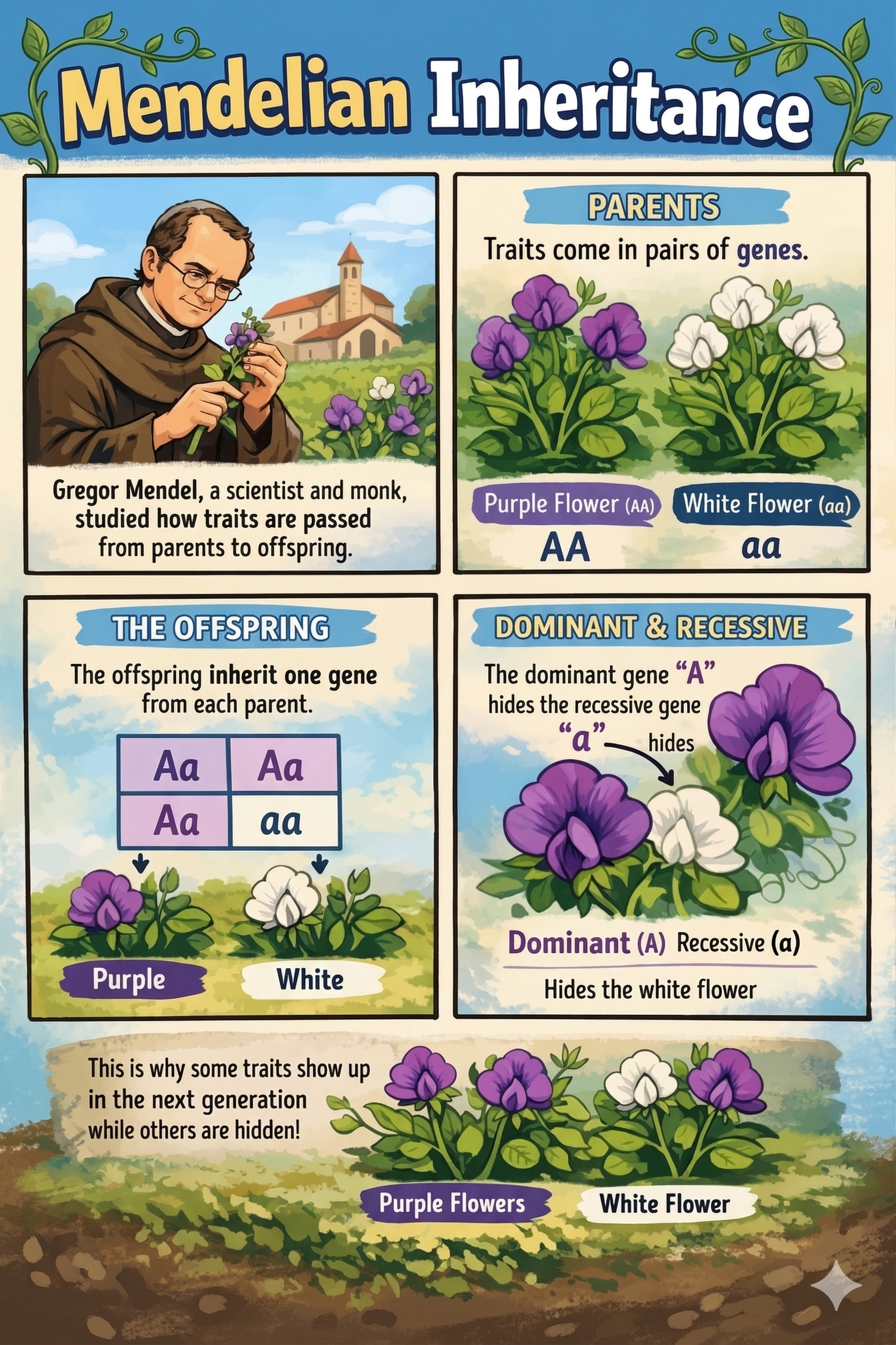
Mendelian inheritance is the pattern of inheritance of traits from parents to offspring based on the laws discovered by Gregor Mendel.
It explains how characteristics are passed through genes, which occur in pairs, with one gene inherited from each parent. Each trait is controlled by two alleles. One allele may be dominant and show its effect, while the other may be recessive and remain hidden unless both alleles are recessive.
Mendel’s Three Laws:
- Law of Dominance
- Law of Segregation
- Law of Independent Assortment
2. Deviations from Mendelian Inheritance
Deviations from Mendelian inheritance are patterns of genetic inheritance where the classic dominant-recessive rules observed by Mendel do not strictly apply.
Types of Deviations
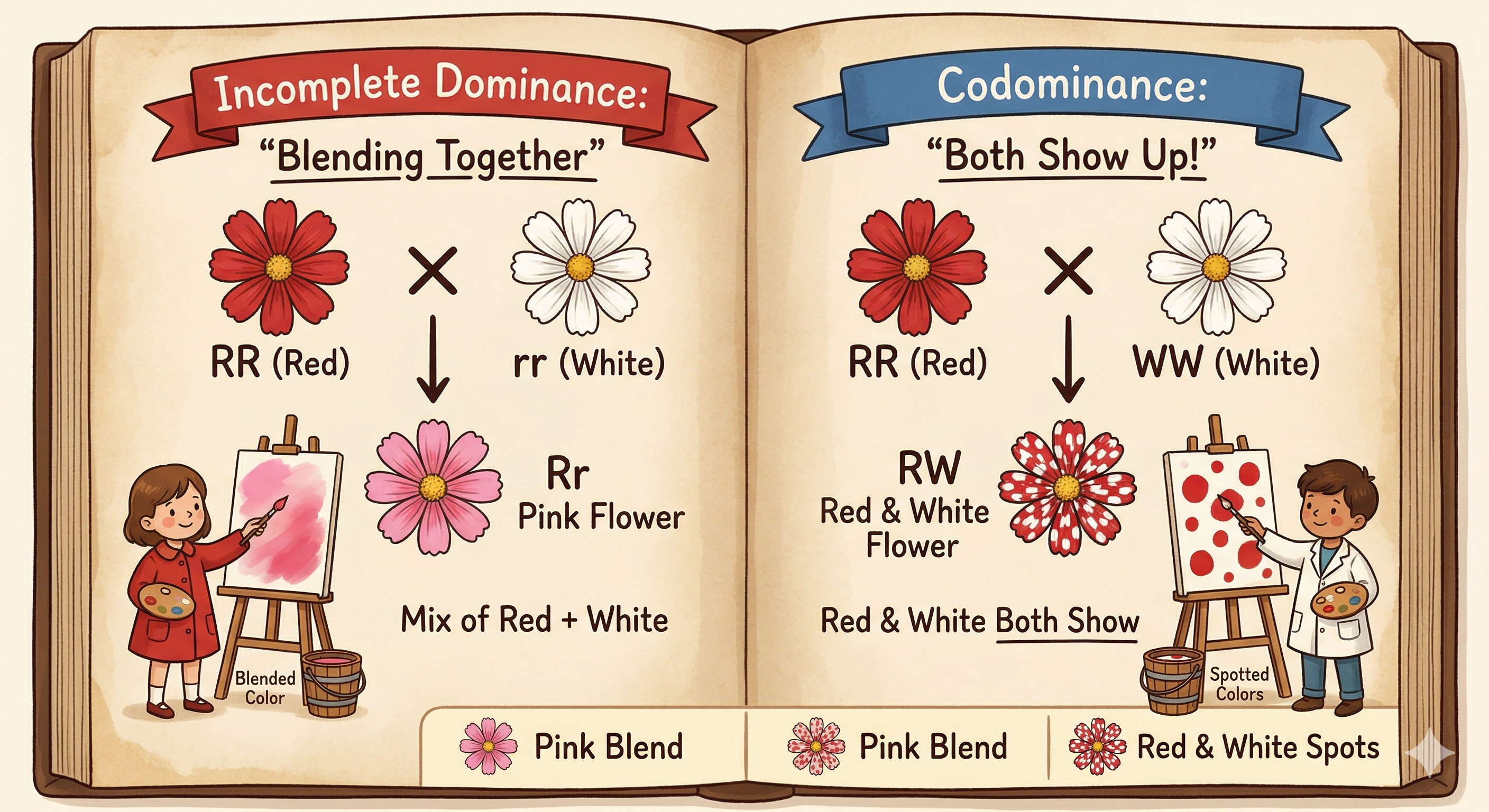
- Incomplete Dominance: Occurs when neither allele is completely dominant over the other. The heterozygous offspring (Rr) show a blended trait.
Example: Red (RR) × White (rr) → Pink flower (Rr). - Codominance: Occurs when both alleles are fully expressed in the heterozygous offspring simultaneously, not blended.
Example: Red (RR) × White (WW) → Red & White spotted flower (RW).
3. Linkage and Crossing Over
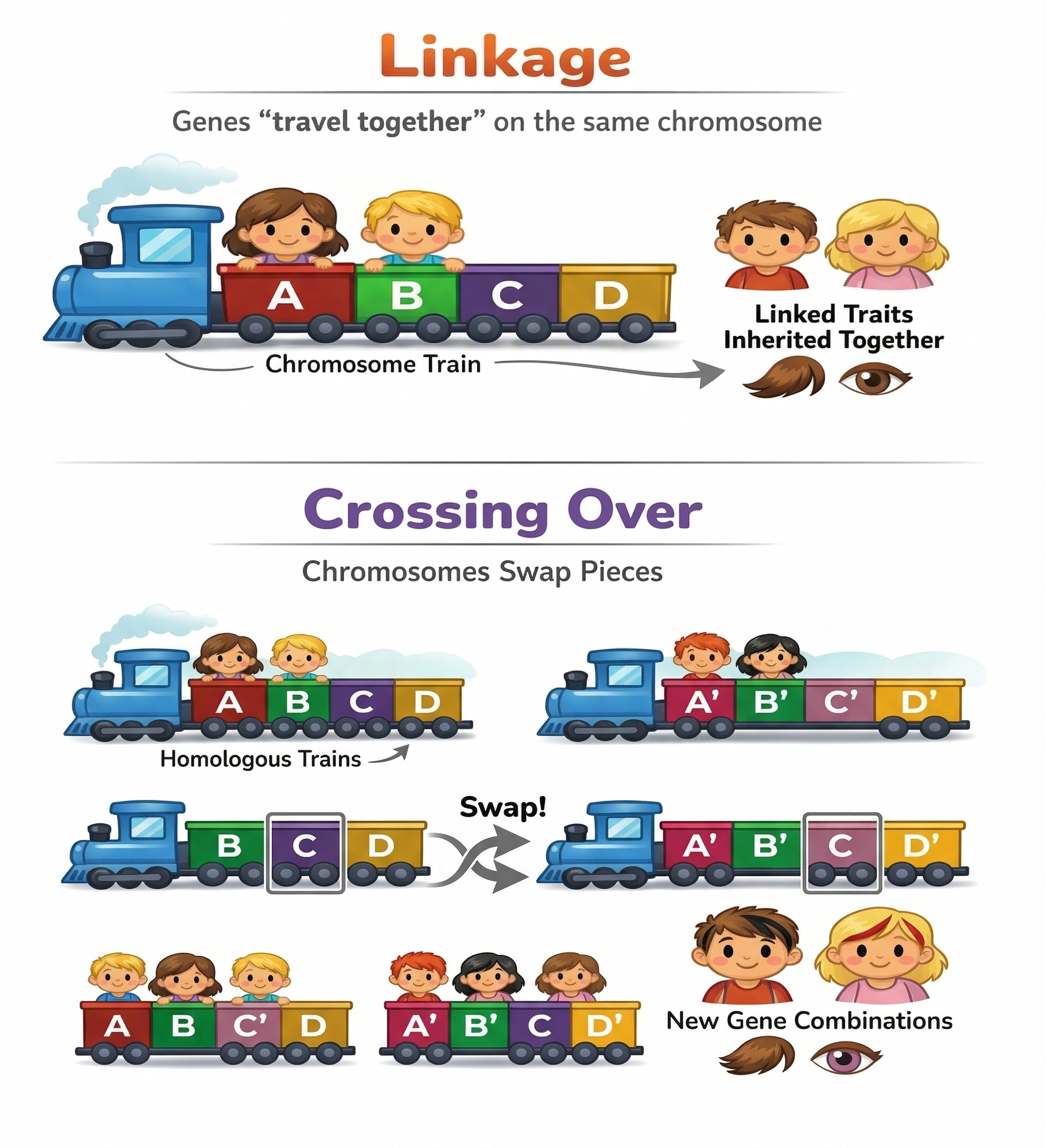
1. Linkage: When genes that are located close together on the same chromosome tend to be inherited together.
2. Crossing Over: When homologous chromosomes exchange pieces of their chromatids during meiosis, creating new combinations of genes.
4. Molecular Basis of Inheritance
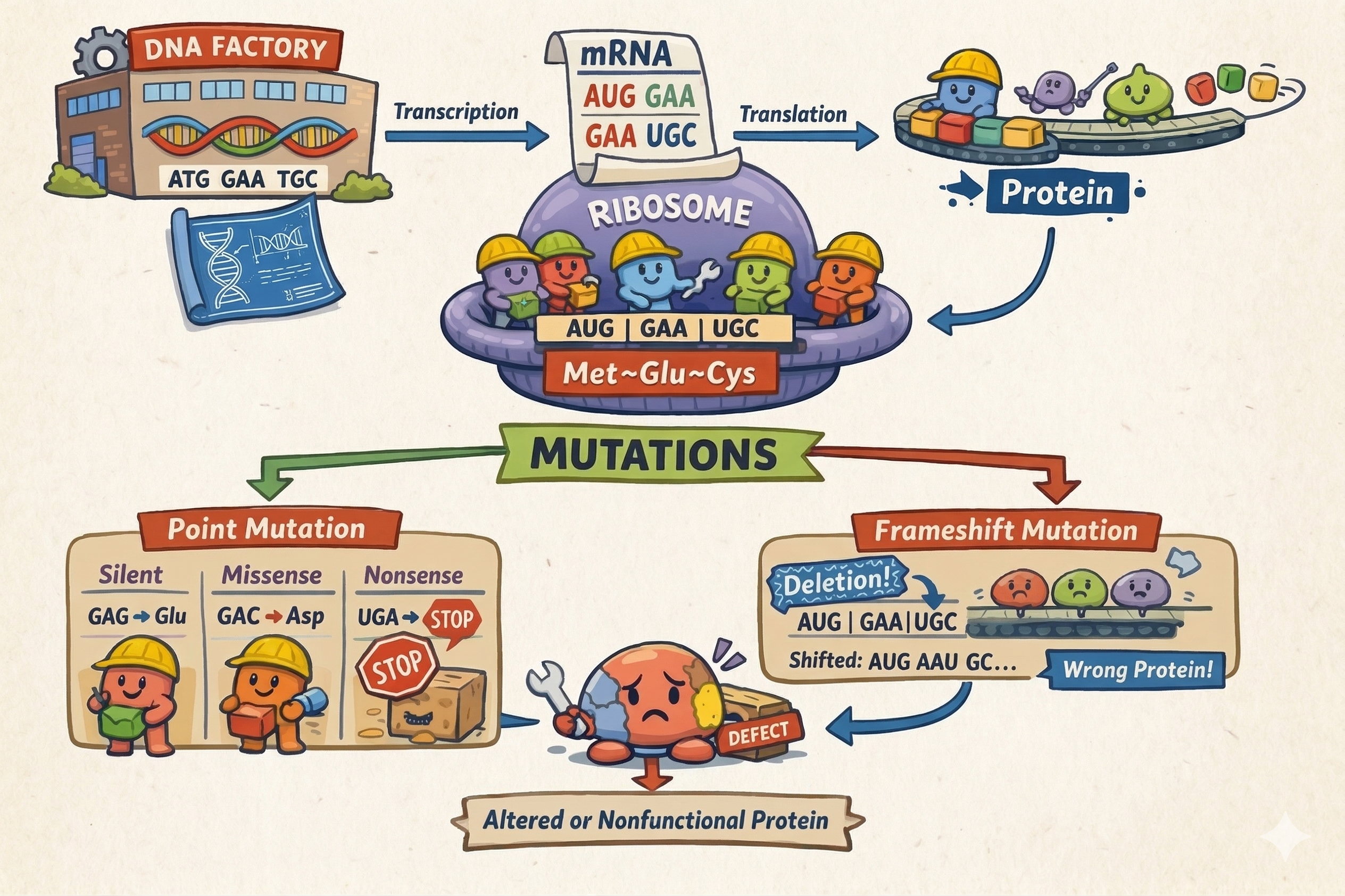
Refers to the study of how genetic information is stored, transmitted, and expressed at the molecular level, primarily through DNA and RNA, which control the synthesis of proteins.
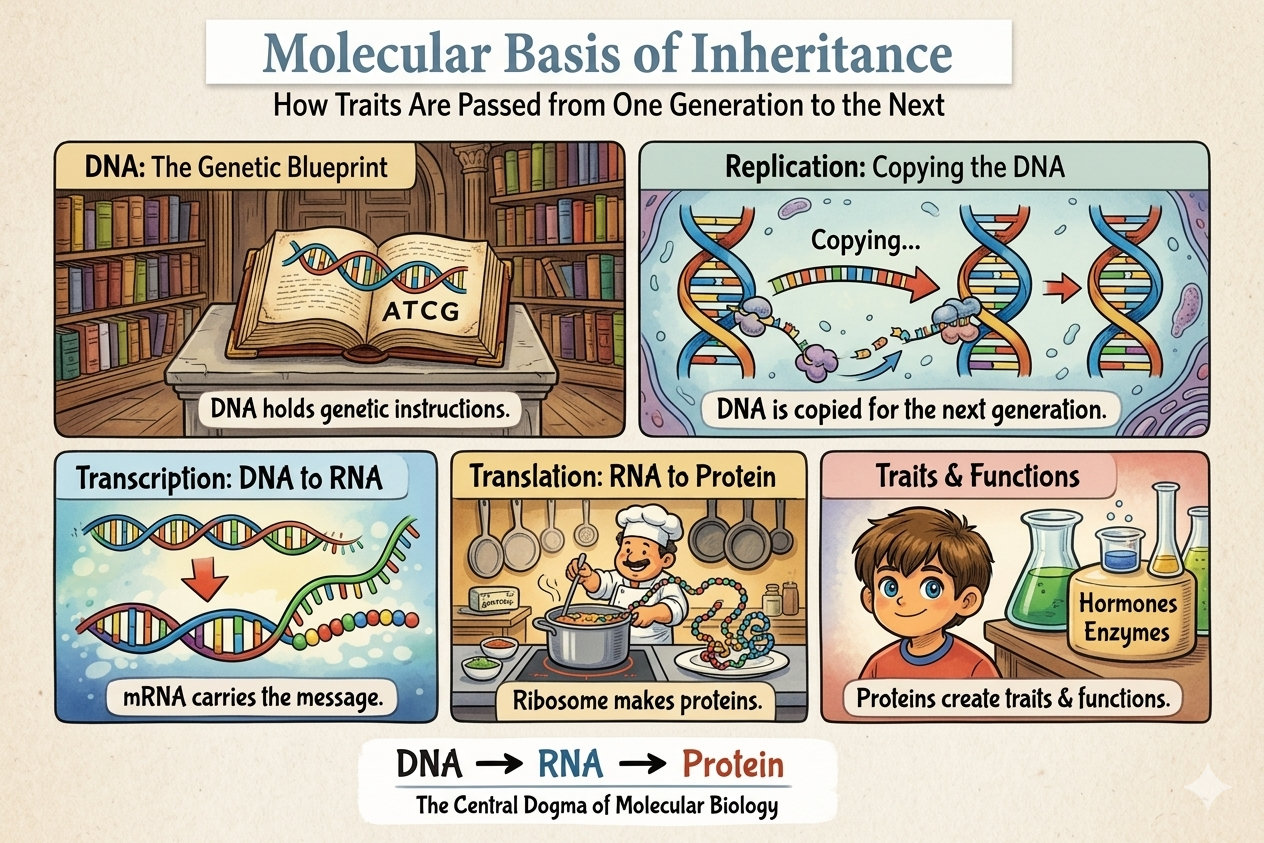
- DNA is the Genetic Material: Carries instructions for building proteins. Made of nucleotides (A, T, G, C) forming a double helix.
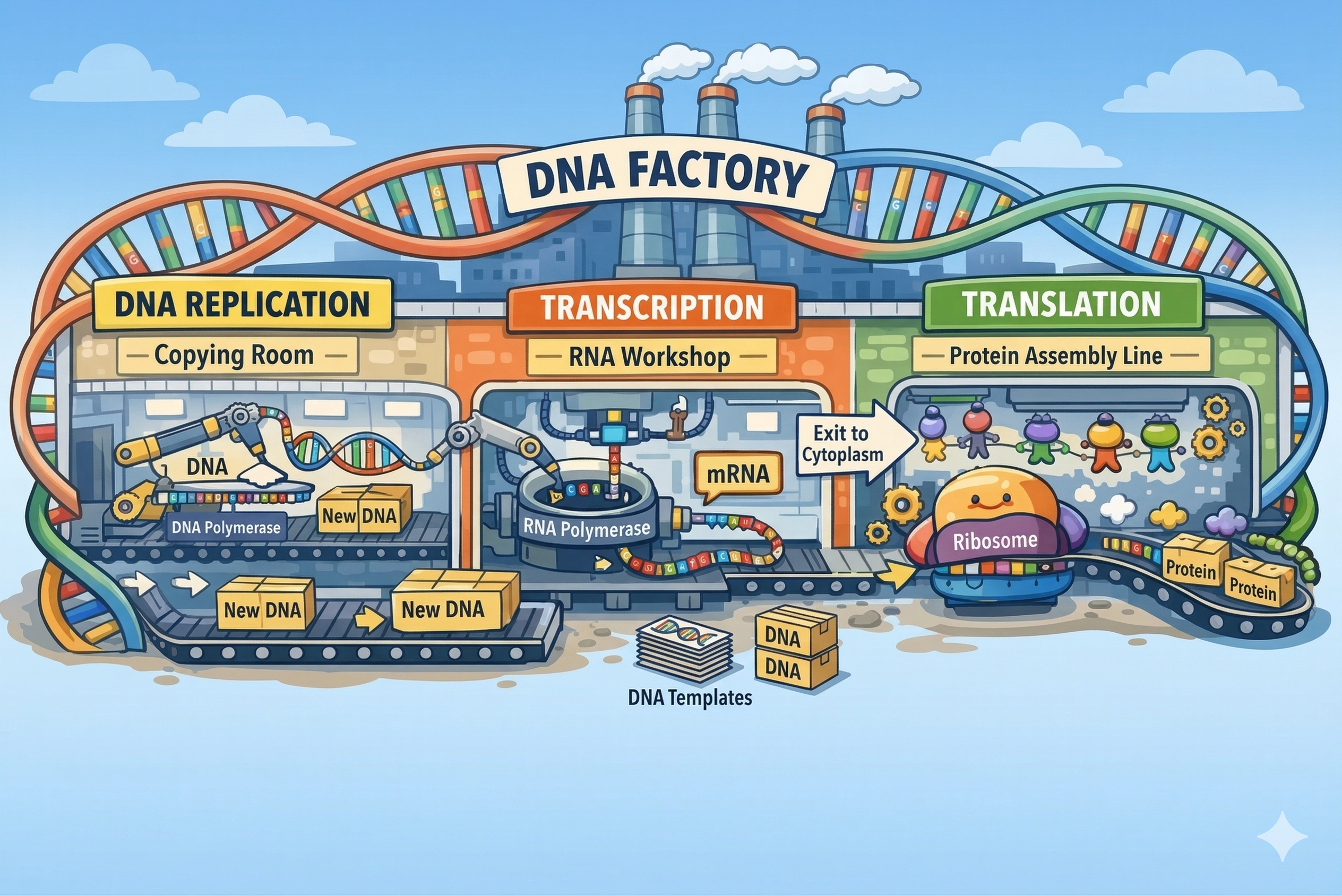
- Replication: DNA making an exact copy of itself during cell division (S phase). It is semi-conservative.
- Transcription (DNA → RNA): DNA is used as a template to make mRNA, carrying instructions to the ribosome. Occurs in nucleus with RNA polymerase.
- Translation (RNA → Protein): Ribosomes read mRNA to assemble amino acids into functional proteins.
- Gene Regulation: Not all genes are active all the time; they are turned on/off depending on cell type or environment.
5. Genetic Code
The genetic code is a set of rules by which the information in DNA or RNA is translated into proteins. It tells the cell which amino acid to add at each step.
6. Mutations & Hardy-Weinberg
Mutations
A permanent change in the DNA sequence that may affect protein synthesis.
- Point Mutation: Change in a single nucleotide (Silent, Missense, Nonsense).
- Frameshift Mutation: Insertion/deletion shifting the reading frame. Very severe.
- Chromosomal Mutation: Affects whole chromosomes (deletion, duplication, inversion).
Hardy–Weinberg Principle (HWP)
"Think of a population as a calm genetic lake. If no one throws stones into it, the water stays still."
In a large, randomly mating population, allele frequencies remain constant provided no evolutionary forces act.
p² + 2pq + q² = 1
- 1. Large population
- 2. Random mating
- 3. No mutation
- 4. No migration
- 5. No natural selection
8. Human Evolution
A short, clear journey from forest floor to city lights. Evolved in Africa, sharing a common ancestor with modern apes.
Early Primates (~65m yrs ago)
Lived on trees, grasping hands.
Australopithecus (~4-2m yrs ago)
The first walkers (bipedal). e.g., Lucy.
Homo habilis (~2.4-1.4m yrs ago)
The handy man. First stone tools.
Homo erectus (~1.9m-110k yrs ago)
The traveler. First to use fire & leave Africa.
Homo neanderthalensis (~400k-40k yrs ago)
Used tools, buried dead, lived in cold.
Homo sapiens (~300k yrs ago - present)
The thinker & creator. Highly developed brain, language, culture.
9. Cell Biology
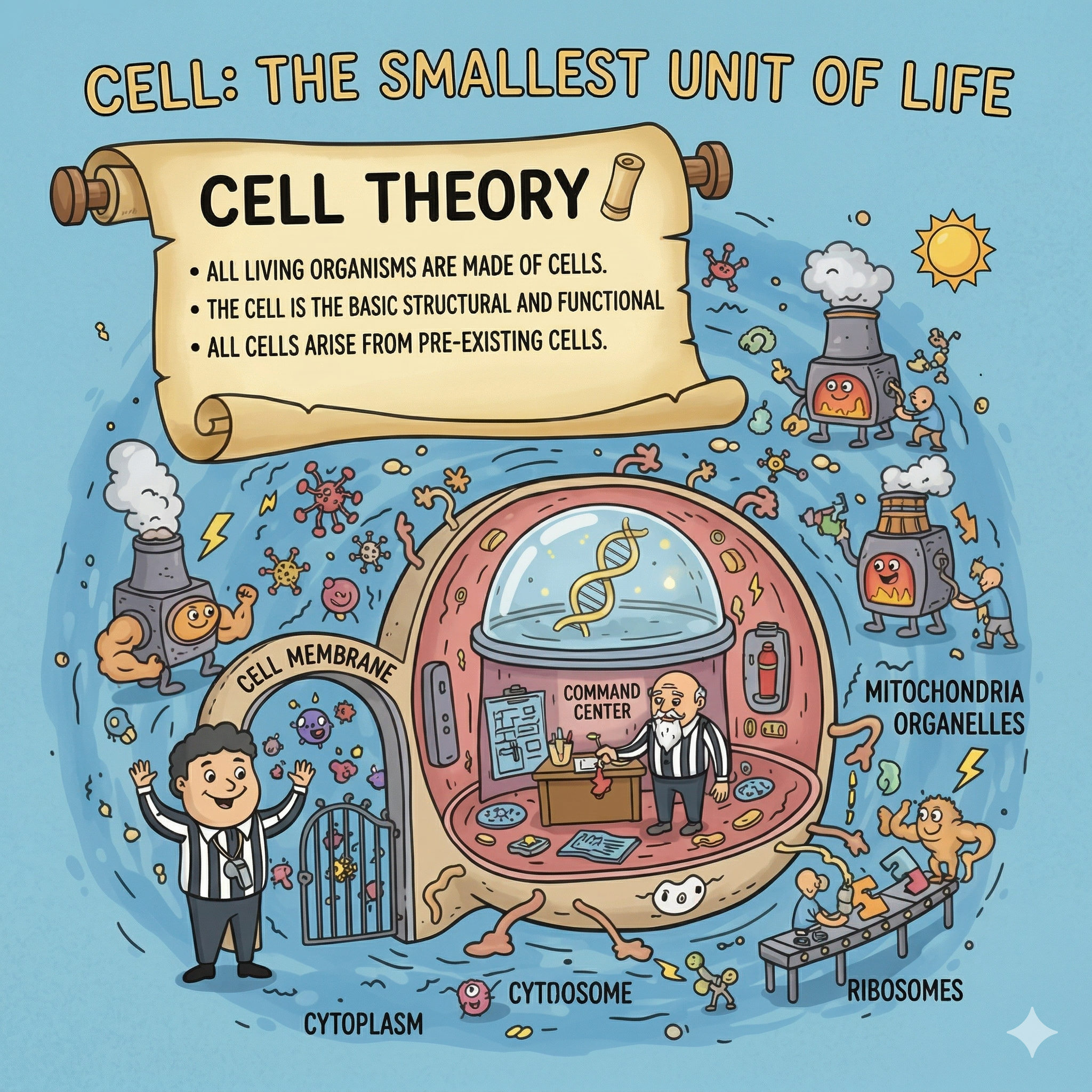
Cell is the basic unit of life. All living organisms are made out of cells.
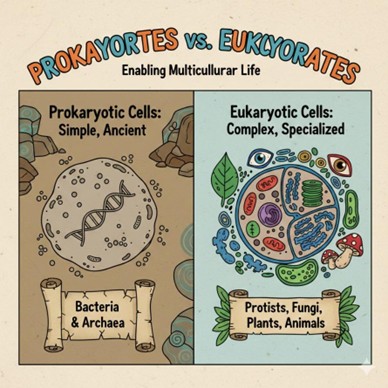
Prokaryotic vs Eukaryotic Cells
| Feature | Prokaryotic | Eukaryotic |
|---|---|---|
| Characteristics | Simple, compact, efficient. No true nucleus, no membrane-bound organelles. | Complex, organized. True nucleus & organelles. |
| Ribosomes | 70S | 80S |
| Examples | Bacteria (E. coli), Archaea | Animals, Plants, Fungi, Protists |
10. Major Types of Biomolecules
Biomolecules are organic molecules produced by living organisms forming cell structures and storing energy. The machinery of life.
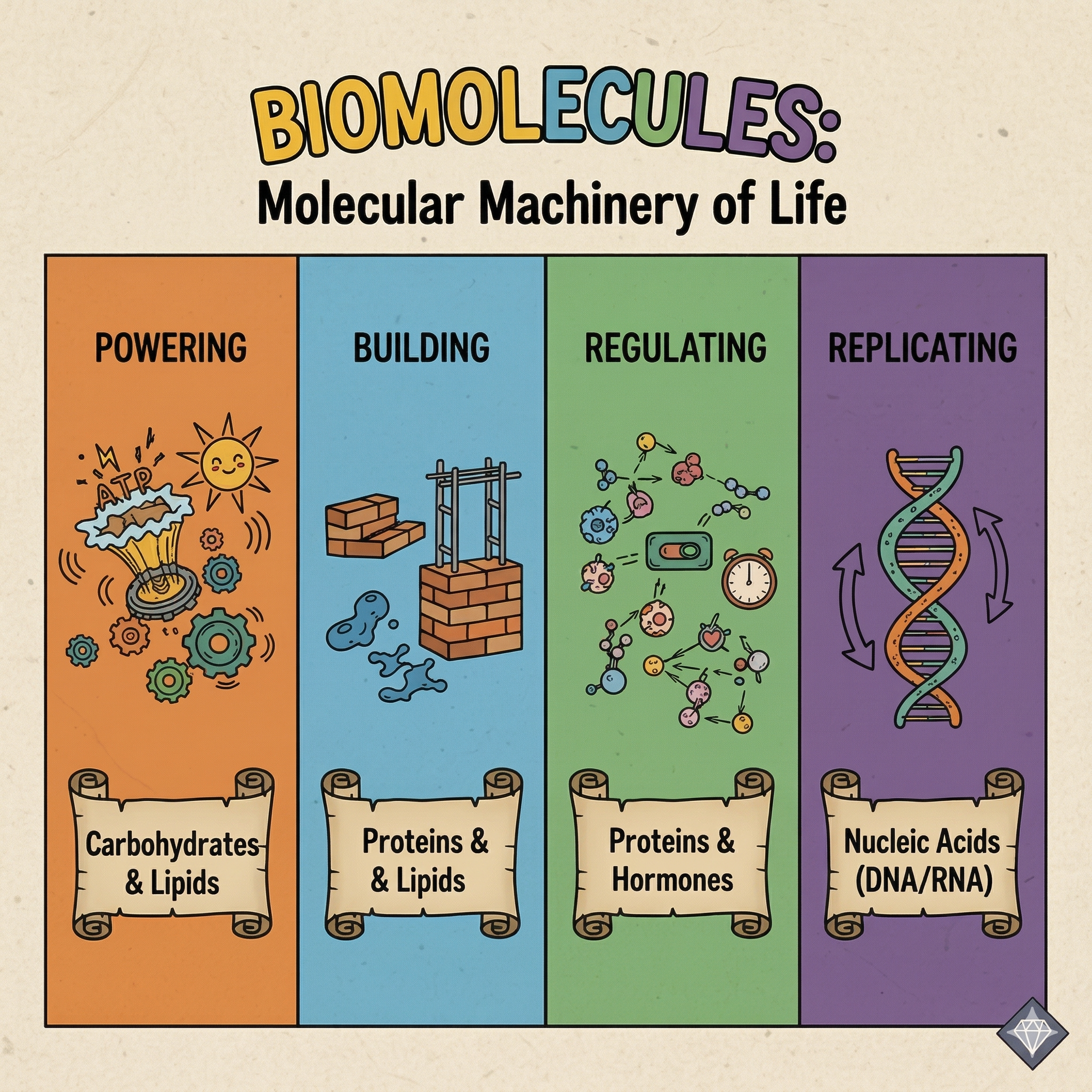
1. Carbohydrates
Primary role: Energy source and structural support. General formula: (CH₂O)ₙ
- Monosaccharides: Glucose, Fructose
- Disaccharides: Sucrose, Lactose
- Polysaccharides: Starch, Glycogen, Cellulose
11. Proteins
Builders and workers of the cell. Built from Amino Acids (20 types).
Functions: Enzymes (Pepsin), Transport (Hemoglobin), Defense (Antibodies), Structure (Keratin).
12. Lipids
Energy storage and insulation. Built from Fatty acids + Glycerol.
- Fats & Oils: Long-term energy storage.
- Phospholipids: Cell membrane structure.
- Steroids: Cholesterol, sex hormones.
- Waxes: Cuticle of leaves.
13. Nucleic Acids
Information carriers (DNA, RNA). Built from Nucleotides.
Store genetic information and control protein synthesis.
14. Vitamins & Minerals
Regulators needed in small amounts. Act as coenzymes, support metabolism & immunity.
- Fat-soluble Vitamins: A, D, E, K
- Water-soluble Vitamins: B-complex, C
Minerals: Inorganic essential elements. Calcium/Phosphorus for bones, Iron for oxygen, Na/K for nerve function.
15. Enzymes
The cell's quiet speed artists. Biological catalysts that speed up reactions without being consumed.
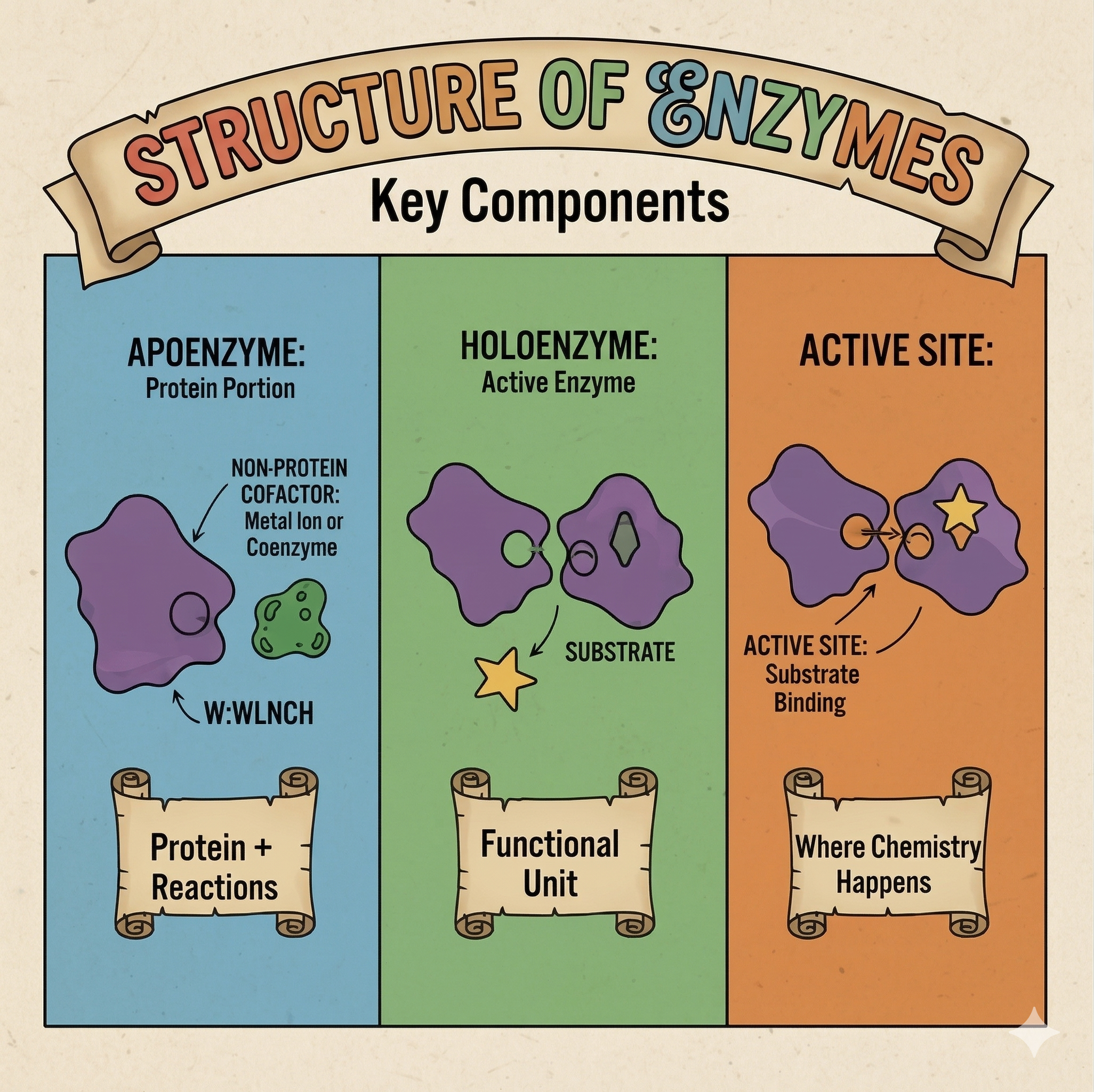
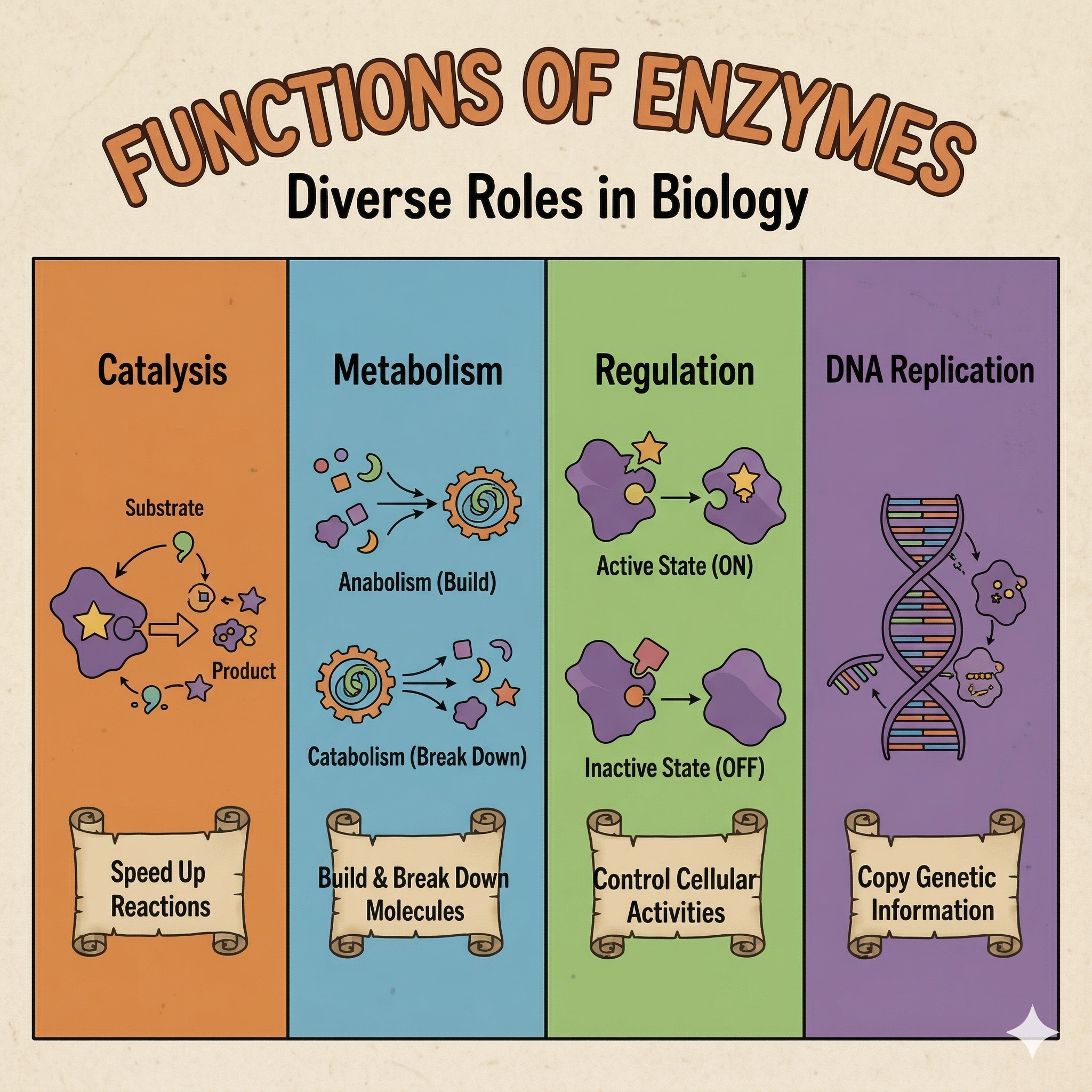
They operate via Lock and Key model or Induced Fit model. Affected by Temperature, pH, and Inhibitors.
16. Cell Cycle & Cell Division
Includes Interphase (G1, S, G2) and M Phase.
- G1: Cell grows.
- S: DNA replication.
- G2: Preparation for division.
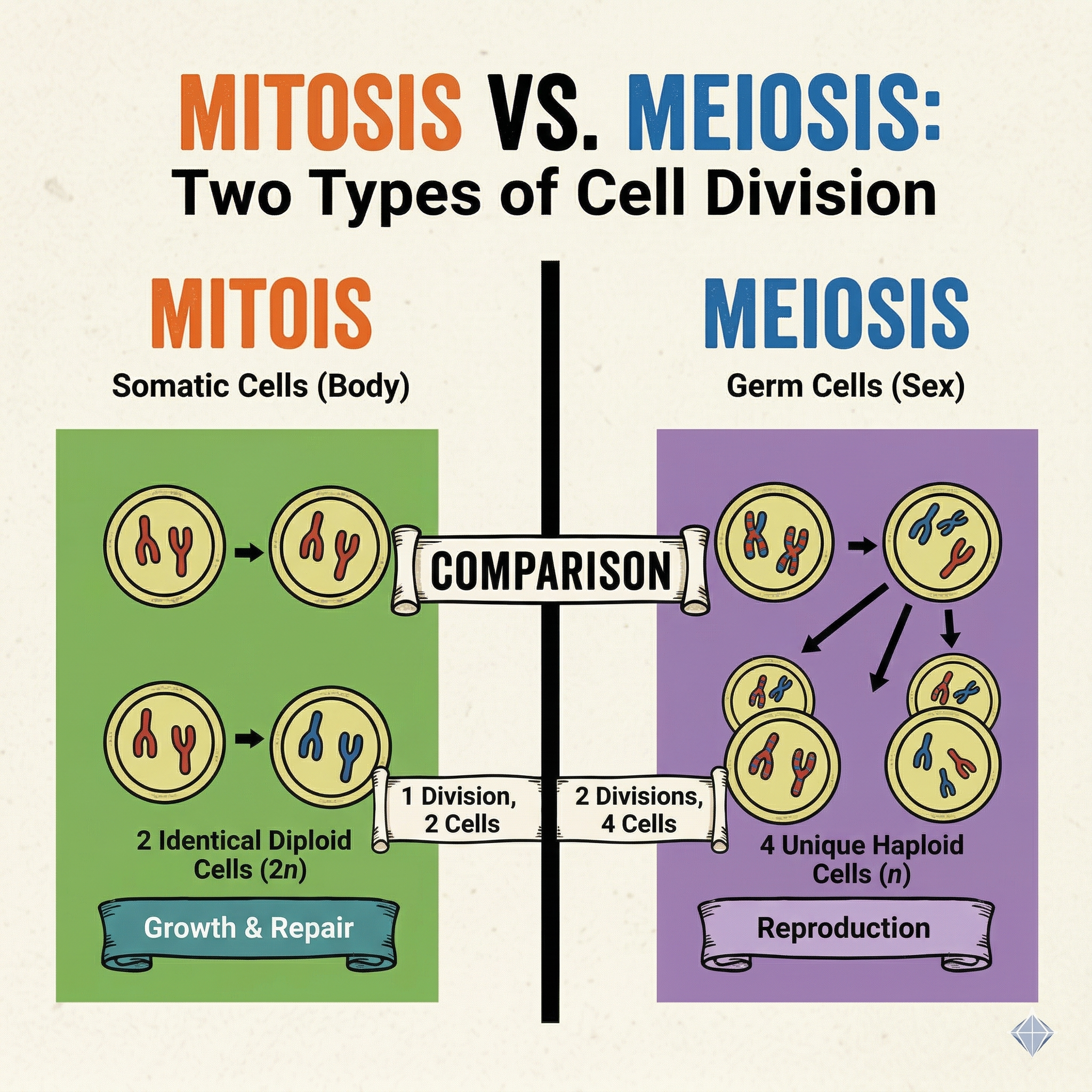
17. Mitosis vs Meiosis
| Feature | Mitosis | Meiosis |
|---|---|---|
| Function | Growth, tissue repair | Sexual variation |
| Output | 2 Genetically identical cells | 4 Genetically different cells |
| Chromosome # | Diploid (2n) -> Diploid (2n) | Diploid (2n) -> Haploid (n) |
18. Plant Physiology (Photosynthesis)
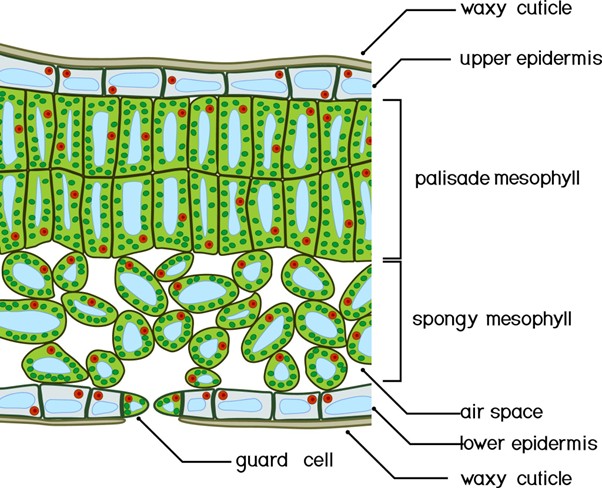
Photosynthesis: 6CO₂ + 12H₂O + light → C₆H₁₂O₆ + 6O₂ + 6H₂O
1. Light Reaction
Occurs in Thylakoid membrane. Uses Light and Water to produce ATP, NADPH, and O₂. Includes photolysis of water.
2. Calvin Cycle (Dark Reaction)
Occurs in Stroma. Uses CO₂, ATP, and NADPH to form Glucose. Includes Carbon Fixation, Reduction, and Regeneration.
19. Diversity in Living Organisms
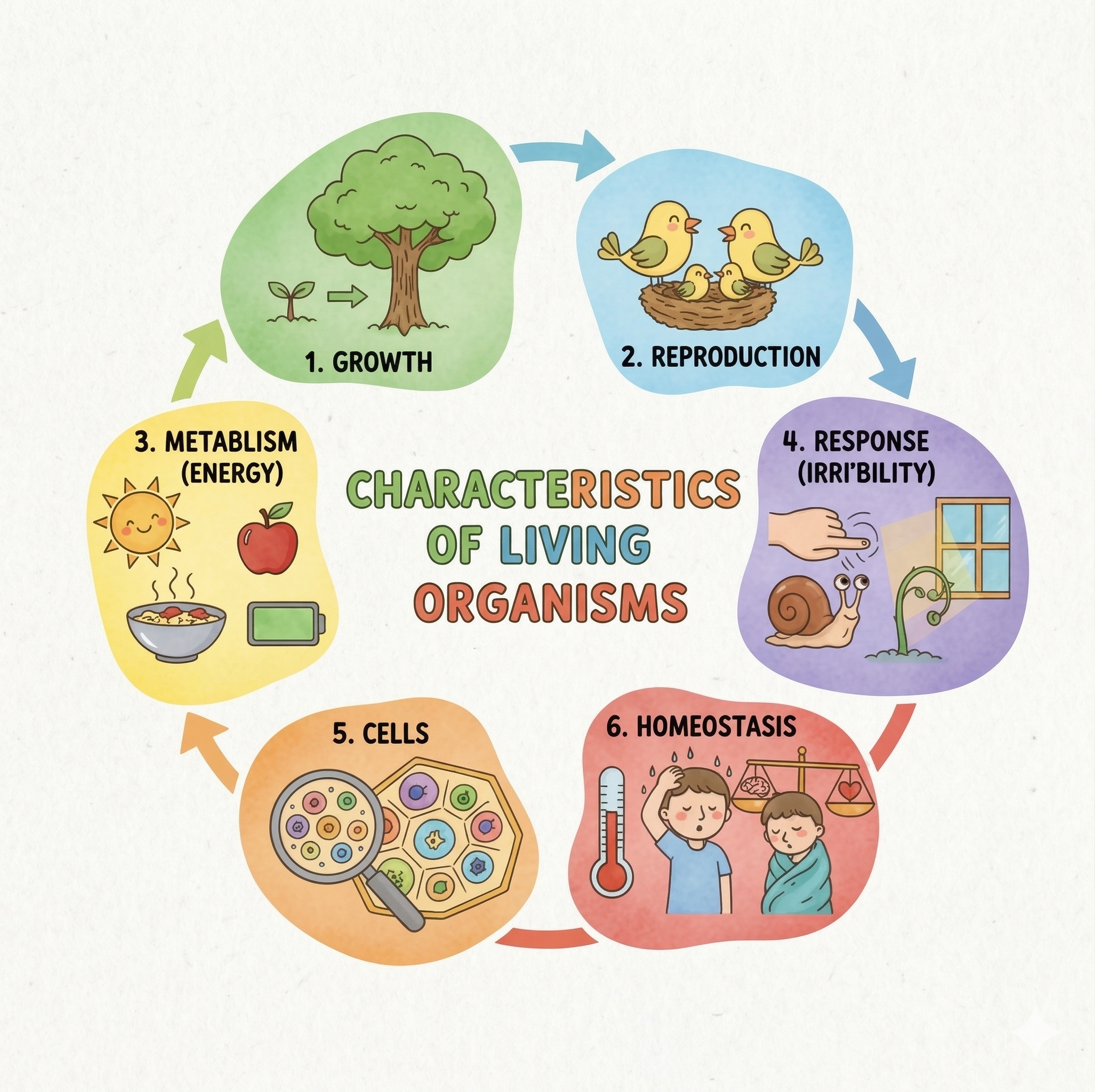
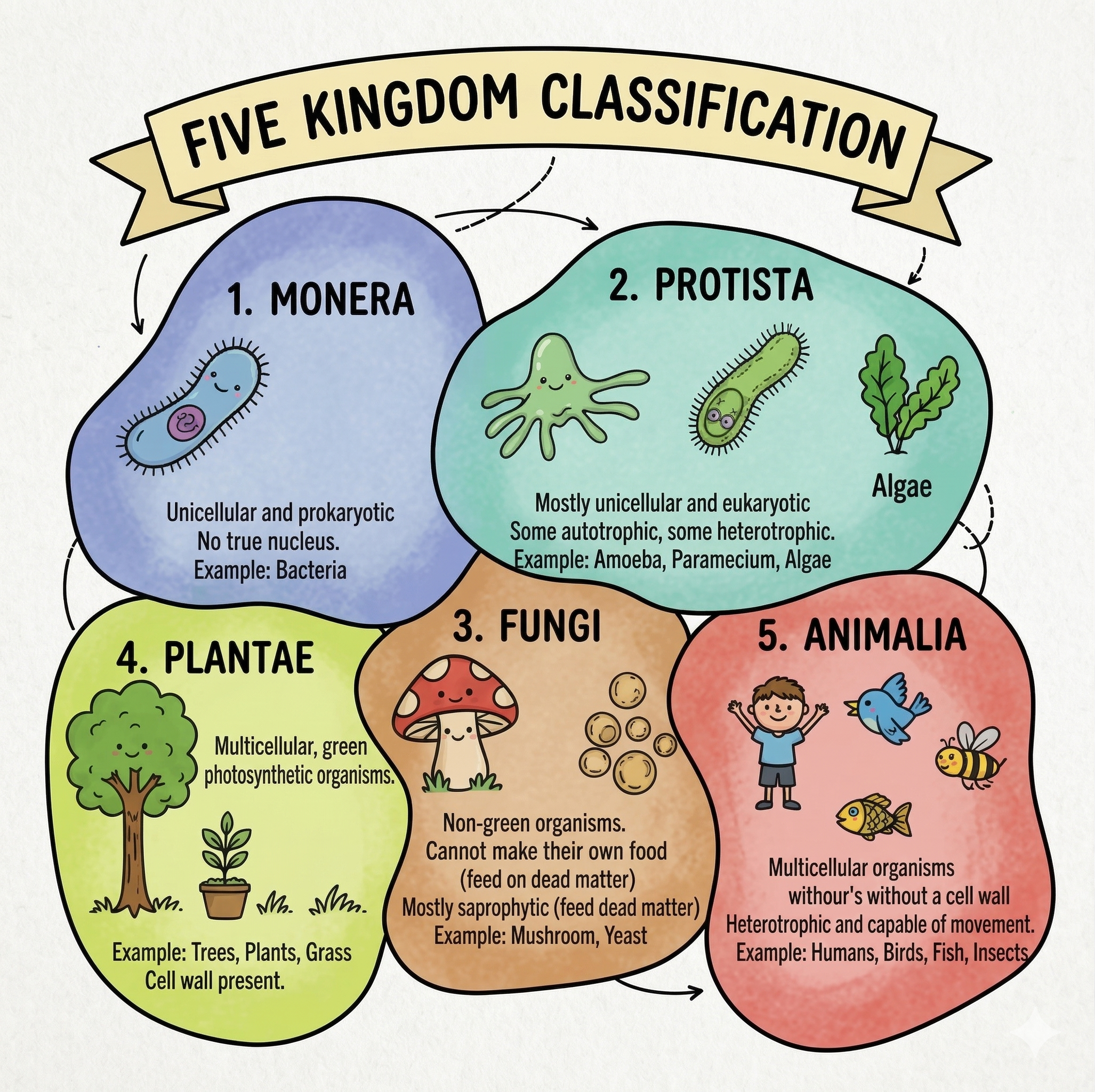
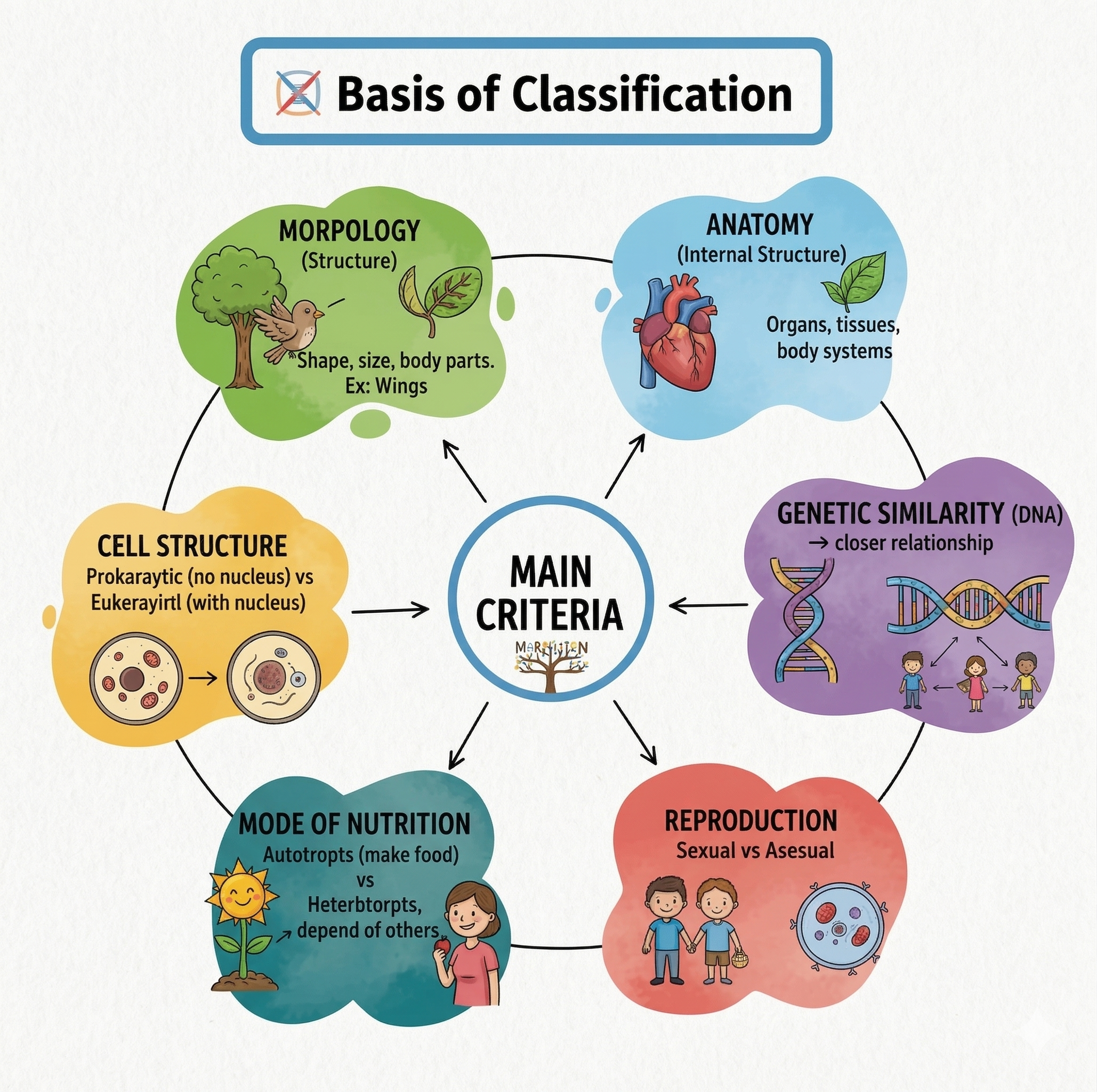
Taxonomic Hierarchy: Kingdom → Phylum → Class → Order → Family → Genus → Species
20. Groups of Plants
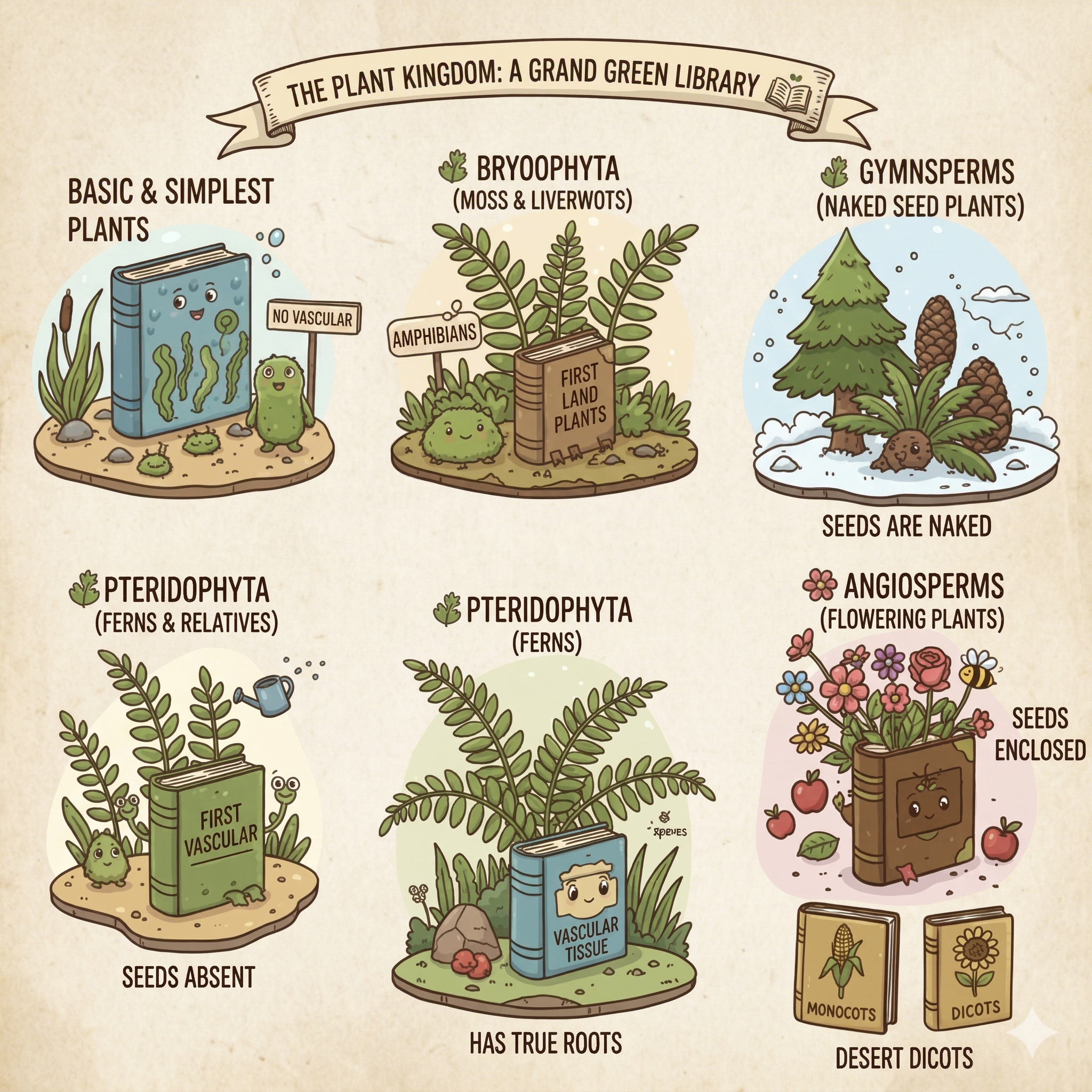
- Bryophyta: Amphibians of plant kingdom, mosses.
- Pteridophyta: First vascular, ferns.
- Gymnosperms: Naked seeds, cones.
- Angiosperms: Flowering, seeds in fruit.
21. Structure of Flowering Plants
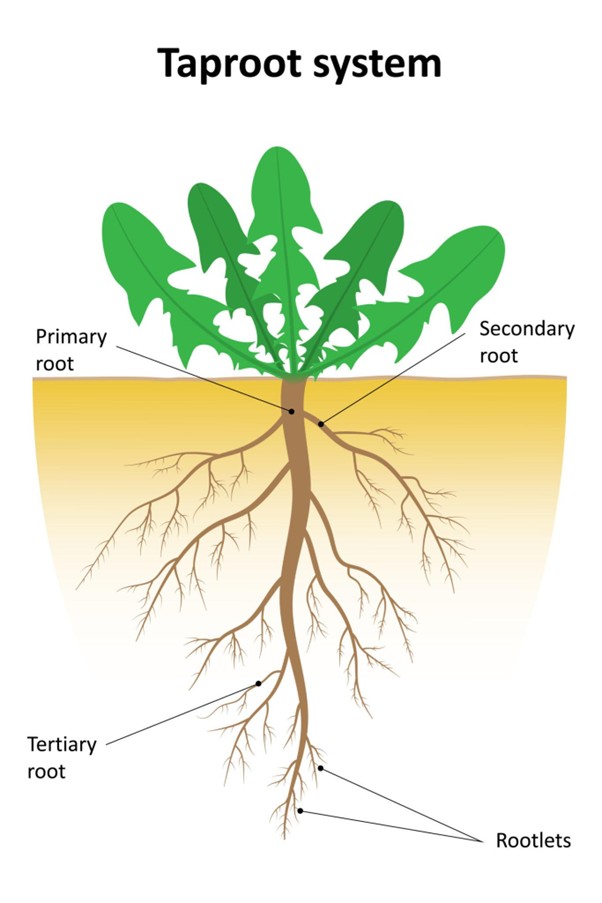
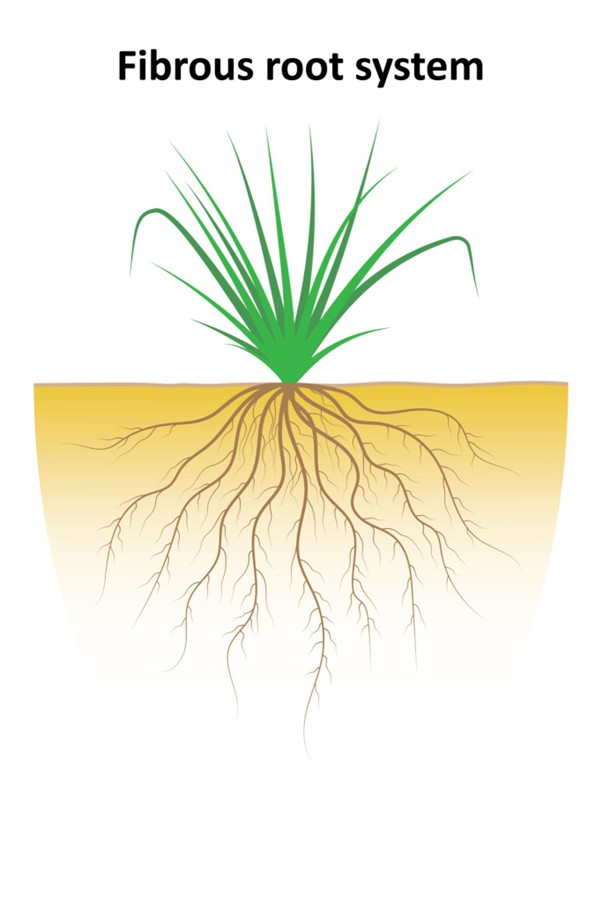
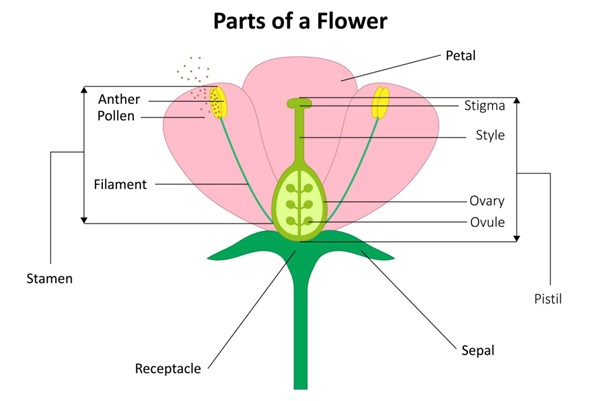
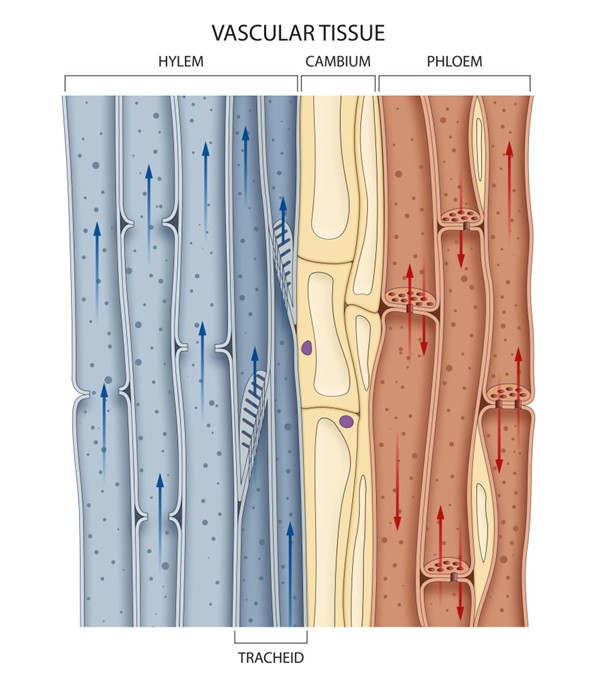
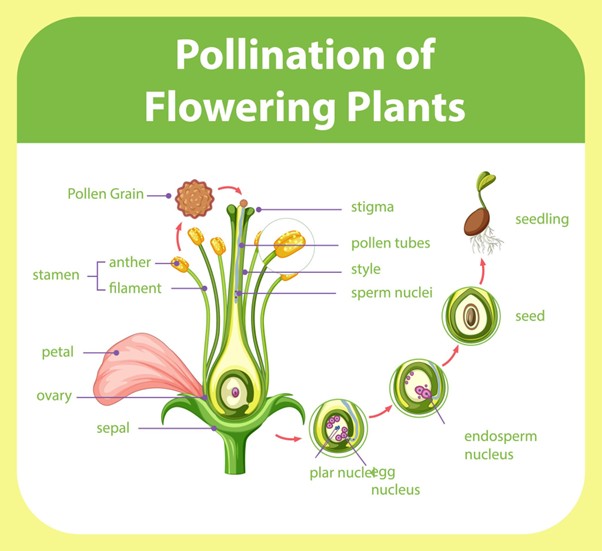
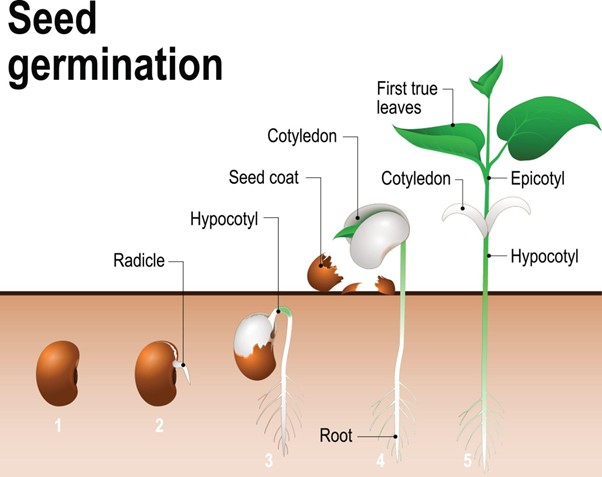
Plant anatomy covers Roots, Stem, Leaves, Flower, and internal vascular systems (Xylem/Phloem).